


Posted on Leave a comment

Choosing the Right Lockout Tagout Supplier

Choosing the Right Lockout Tagout Supplier

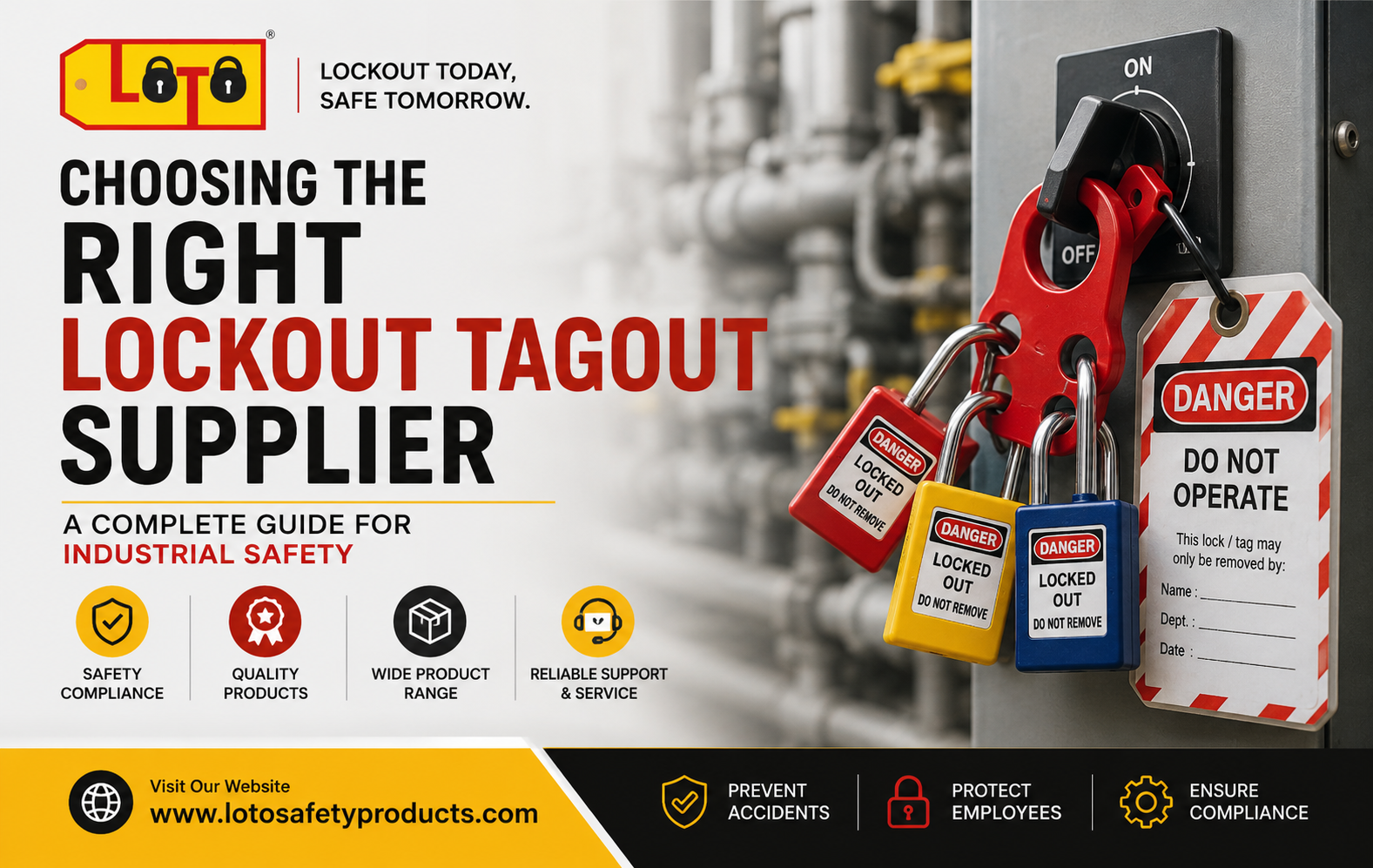
Workplace safety is no longer just a policy written on some document, but a live and evolving eco-system that directly impacts workers’ wellness and efficiency. Over the years, as the level of awareness increased from an institutional and regulatory standpoint, the legal repercussions for non-compliance increased proportionately. One subject which has been an integral part of the increased awareness is that of Lockout and Tagout. Lockout/Tagout (LOTO) plays a critical role in ensuring safety by isolating hazardous energies across industries like Oil and gas, Construction, Manufacturing, Steel, F&B, Ports and so on. To implement LO/TO policies, a system of hardware is required to physically isolate and lock the hazardous energy sources. As important it is to have a competent, robust and reliable Lockout Tagout policy, it is equally important to find the same qualities in your Lockout Tagout supplier

In a world full of choice, there exist multiple options and avenues to buy Lockout Tagout products. So evaluating and choosing a reputable lockout tagout hardware brand or a reliable supplier of lockout tagout equipment is crucial as failure of hardware can cause failure of policy implementation too. The following text will elaborate more on these points to guide you on the importance of choosing the correct supplier and how to make an informed choice.

What is Lockout Tagout (LOTO)?

For our readers who are new to this subject, let’s do a quick recap on what Lockout Tagout (LOTO) is. LOTO is a safety program developed to ensure all hazardous energy sources are isolated and locked on a machine/equipment before any maintenance/ work is performed on it. This is done to prevent any uncontrolled release of stored energy while working and prevents unauthorized or accidental start-up of the machine. The isolation and locking of these hazardous energy sources is done using LOTO Hardware which includes different types of locking devices (Lockout) and warning labels (Tagout). 

The control points of these hazardous energy sources often include switches, valves, circuit breakers and so on. These points are first isolated from the system and once they have achieved “Zero Energy State”, they are physically immobilized and locked by the LOTO system( comprising the Padlock, Lockout Device and Tag). The lockout device and padlock prevent the system from being re-energized physically, while the tag relays a warning message along with details of the person who has implemented the LOTO. Thus, preventing accidental or unauthorized operation.

When and Where It’s Used

LOTO procedures and products are widely used across different industries, such as:

  • Oil and Gas: This Includes Upstream, Downstream and Chemical Industries linked to Refining. The hazard level on these sites is one of the highest, making LOTO usage a non-negotiable step.
  • EPC Contractors:  EPCs working in the ONGC sector, Power Generation or any Greenfield projects are required to use Lockout Tagout during Commissioning and Testing.
  • Construction: Large scale Commercial and Residential projects too use LOTO during the MEP stages of the build.
  • Utilities: Site Owners, O&Ms and Contractors need to use LOTO at all stages (Generation, Transmission and Distribution) for Electrical and Mechanical Isolations. 
  • Manufacturing, F&B, Pharma and so on: Any sector of manufacturing that employs the use of machines/ equipment uses Lockout Tagout procedures and products during the maintenance schedules of their equipment, whether planned or unplanned.

Overall, LO/TO is a critical part of any HSE program and is widely used during the commissioning, maintenance or Shutdowns of plants. To ensure LOTO products perform in these high-pressure environments, it’s essential to rely on and work with Specialized LOTO Suppliers who understand the gravity of these situations too.

Why Choosing the Right LOTO Supplier Matters

Applicable across all sectors, industries and companies that use Lockout Tagout products, it is important to choose a trust-worthy and qualified Lockout Tagout Brand or Electrical Safety Products Supplier for the following reasons:

Worker Safety

When reliable LOTO products are used, the chance of product failure is unlikely. This directly impacts the worker’s safety on site as failure of the LOTO devices and padlocks can result in tampering and unauthorized re-energization, putting lives in danger. To reduce the risk of an incident or fatality, it’s essential to use quality products sold by bonafide Suppliers.

Compliance

As there is no manufacturing standard for production of Lockout Tagout products, the most popular standard referred to in this subject is the one by OSHA – 29 CFR 1910.147. A Supplier who can recommend products to help you conform to this (or an equivalent standard by your local authority) becomes crucial as it helps you not just stay safe and compliant, but also assists in deterring any fines or legal actions for non-compliance.

Equipment Protection

Safety Procedures and Products are primarily used to mitigate risks of health and injury for the work force. But it also has a direct impact on the life-span of the plant and equipment too. Quality LOTO products minimize risk of accidents during maintenance programs and keep your equipment protected resulting in reduced down-time and higher efficiency. 

How to Evaluate a Lockout Tagout Supplier?

Let’s be honest, in our highly globalized and competitive environments, most decisions are made majorly based on 1 factor………… PRICE.

While I agree that Price should be considered while buying Lockout Tagout Products, there are certain complexities around these products which make Price an important but not the defining factor for decision making. Here’s what one should look for while evaluating their LOTO Suppliers:

Product Range 

As Lockout Tagout systems involve isolating and locking multiple hazardous energy sources (i.e Electrical, Mechanical, Thermal, Hydraulic, Pneumatic, etc.), it is important to consider the range of products offered by the supplier. A wider range of products reflects a holistic solution offering, which is in sharp contrast to many small time LOTO Suppliers who sell a few padlocks, tags and hasps and falsely claim to be “Qualified LOTO Suppliers”.  

A Supplier’s qualification is very subtly reflected in their product range as they are more equipped to service all types of isolation requirements. As opposed to the “Qualified LOTO Suppliers”, a Serious LOTO Brand and/or Supplier offers products like : 

  • Padlocks: In various colours, Shackle sizes & types, Materials and Key-systems
  • Circuit Breaker Lockouts: Designed for electrical switches, MCBs, MCCBs and so on
  • Valve Lockouts: For Ball, Gate and Butterfly Valves
  • Lockout and Padlock Stations: Centralized storage solutions for LOTO devices
  • Danger and Warning Tags: With different messages and colours for various applications
  • Hasps and Group Lockout Boxes: For Group Locking activities
  • LOTO Kits: An amalgamation of different LOTO Products depending on the use case
  • Electrical Plug, Panel and Pendant Lockouts: For immobilizing control points of machinery
  • Other LOTO Products and Accessories: Including but not limited to Key Cabinets, Key Safe Boxes, LOTO Stickers and Posters, LOTO Bags and storage solutions, Car Seals, Flange Lockouts, Loto Shadow Boards and many more.

One often requires a combination of the above products to ensure a comprehensive LOTO Program implementation. So it’s recommended to choose a Supplier who can offer the whole solution at once.

Bonus: If a company has patented products, it’s a good sign as they are constantly thinking of the gaps in existing products and developing new ones to solve problems and make the workplace safer.

Experience and Knowledge

Like applicable to most products and solution providers, the experience and knowledge of the supplier also counts heavily towards their evaluation. It matters more so in LOTO because although people might be aware and well-versed with the policy side of Lockout Tagout, the implementation side has scope for ambiguity due to the wide variety of products which exist to accomplish very specific tasks.

For instance, LOTO Padlocks have multiple key systems like Key Different (KD), Key Different + Master Key (KD+MK), Key Alike (KA) and Key Alike + Master Key (KA+MK). A good supplier can evaluate the requirements of the end user and recommend different key system solutions based on their applications (to be elaborated in a future Blog).

A capable and reliable LOTO Products supplier can help not just recommend the correct products, but can also help in reducing your cost of procurement by recommending products with multi-functional features and prevent you from buying products which might not be useful for your application thus saving you time and money.

Product Quality

In the strive for competitive pricing, suppliers may compromise on the quality of their products to achieve lower costing. While not detrimental immediately, in the event of a product failure due to poor materials being used or lack of proper production or QC controls, the impact of saving a few bucks to meet budgetary targets can lead to a much bigger loss later. 

Evaluating the quality of Plastic (ABS, PA66 Nylon or Polypropylene) and Metals (Chrome Plated, SS304, Aluminium, Brass, etc) is necessary based on your application. A LOTO Padlock which claims to be suitable for high temperature environments cannot have a body made from Polypropylene due to its lower melting point. Similarly, a supplier claiming their Chrome Plated Shackle Padlock is highly durable for extreme outdoor weather is false because the Chrome plating will wear off quickly and the shackle will start rusting. Instead a SS304 shackle is much better suited for such environments.    

Looking Beyond Price

Let’s start by asking a very basic question to ourselves: What is the price of a product? Is it just the cost of the materials + a nominal Profit Margin? Or is it the culmination of the efforts, thoughts and hard work of everyone involved in the production, R&D, supply chain, marketing & sales and warehousing of the product? I’d like to think it’s the latter. Why? Because that’s what separates a mediocre product from an excellent one. And that excellence is reflected not only in the product but also in the customer journey.

Pre-Sales Support – In respect to LOTO, this journey starts by understanding the client’s Lockout requirements, proposing relevant or better products to solve their challenges in Isolation and personalizing solutions rather than pushing generic products to meet sales targets.

After-Sales Support – An experienced and competent supplier can also hold LOTO Awareness programs for first time users by conducting site visits, product demonstrations and isolation gap analysis to ensure a customer is not left clueless after buying the products.   

Closing Thoughts

Paying for value rather than price always benefits in the long-run. While it might not be possible to evaluate every LOTO Supplier/ Brand against the same yard stick – due to differences in regions, regulations and operational requirements –  it’s still important to assess them on their own merits. After all, when it’s your safety and life on the line, who’d you trust more to supply your LOTO Products? 


 * The author of this blog is Zulfikar– Director at LOTO Safety, Dubai.
This blog is written to educate interested parties on Lockout Tagout products.
Posted on Leave a comment

Types of Lockout Safety Padlocks and Why It Matters

Types of Lockout Safety Padlocks

While discussing Industrial Safety, LOTO (Lockout Tagout) is a key topic of conversation and although most literature is centred on Lockout Tagout procedures, it is also imperative to analyse the type of hardware used to implement said LOTO programs.

The Safety Padlock is the core of any LOTO procedure as it not only a physical tool to immobilize an energy source, it is also a channel to communicate intent and ownership over the isolation point.

After selling Safety Lockout Padlocks for the last decade, I have witnessed a variety of hacks used on sites to avoid using actual LOTO padlocks. Luggage locks are the most common knock offs that are used as a substitute for Safety Lockout locks. While maybe being cost effective, luggage locks lack several features which can expose the user to risks at a later stage. Lack of Key systems and Key charting, reduce key traceability and lack of colour coding padlocks can weaken even a robust LOTO program.

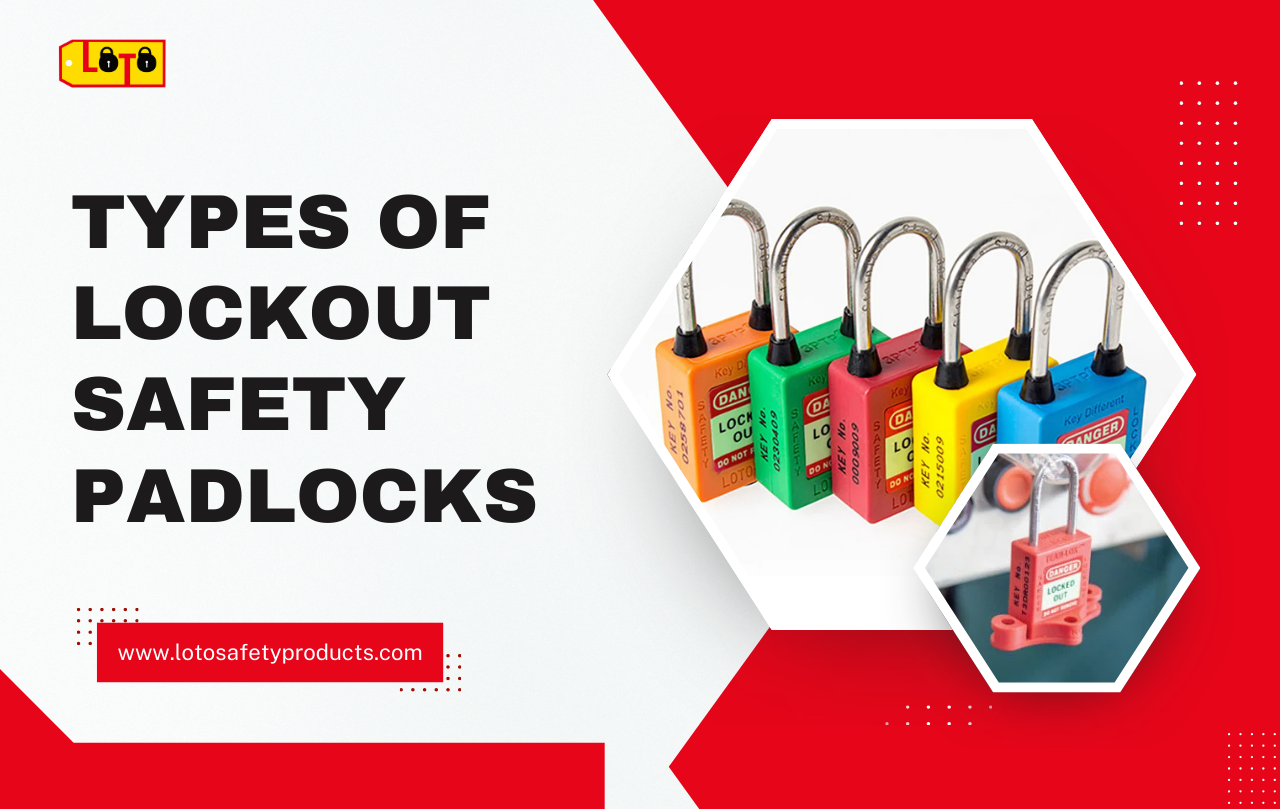
With the increasing awareness and compliance requirements in Lockout Tagout, instances like the above are on the decline. To raise this awareness further, let’s explore in this guide the Different types of padlocks that can be employed in a Lockout Procedure based on features, applications and industry:

Different Types of Lockout Tagout Padlocks

Premium Plastic/ Nylon Body Padlocks

Premium plastic safety padlocks are the most common and versatile padlock used in Lockout Tagout applications. The Nylon/ ABS body makes it functional for indoor/ outdoor and electrical/ mechanical isolations. For electrical lockouts, it is advisable to use a dielectric plastic shackle to reduce risks of shock or arc flash through exposed metal.

  • Applications: MCBs, MCCBs, DBs, MDBs, SMDBs, Isolator handles, Ball Valves, Gate Valves, Butterfly Valves
  • Industry: Oil and Gas, Utilities, Metals, Mining, Manufacturing, Packaging, Marine

Aluminium Padlocks

Based on your geographic location, the Aluminium padlock might be the preferred padlock for LOTO. This strong and light-weight padlock is ideal for harsh or high temperature environments where plastic fails. Its anti-corrosive properties make it ideal for industries which are subject to heavy and regular wash downs

  • Applications: Outdoor Isolations, High temperature valves (Steam valves), Boiler Room and Other mechanical lockout points like Ball Valves, Gate Valves and Butterfly valves.
  • Industry: Oil and Gas – Onshore and Offshore, Utilities, Food, Pharmaceuticals

Economy/ Contractor Padlocks

As the name suggests, these plastic padlocks are the budget friendly option which offer an equivalent level of protection at an economical price point. They are not as feature packed as most Lockout padlocks but are ideal for temporary use by contractors during shutdowns and turnarounds on plants.

  • Applications: Electrical and Mechanical lockouts during testing and commissioning on constructions sites, shutdowns and turnarounds on plants, other temporary usage by contractors
  • Industry: EPCs, Construction companies, Contracting companies, Electromechanical contractors, MEP Contractors

Mini Padlocks

The miniature plastic padlocks are handy for tight spaces where regular Safety Lockout Padlocks cannot reach. Housing a 34mm padlock body and 29mm shackle height with 4mm diameter, this padlock becomes the ideal solution for electrical isolations on multiple breakers where users are reluctant to use regular sized padlocks.

  • Applications: Direct Isolations on MCBs, MCCBs, ELCBs, MPCBs, TMCBs
  • Industries: Construction, Manufacturing, Food and Pharma, Oil and Gas, Utilities, Metals and so on.

Steel Laminated Padlocks

The Steel Padlock was the popular option in the early days due to its strength and resistance to degradation in extreme environments. As the technology in plastic improved, the steel padlock was moved to the background. While still effective and used by many industries, the steel laminated padlock now serves limited purpose.

  • Applications: Mechanical Isolations in heavy duty industries and outdoor Lockouts
  • Industries: Mechanical workshops, Metals, Mining and Construction

Cable Lockout Padlocks

As described in its name, the Cable Padlock was created by replacing the shackle of the padlock with a cable (steel or vinyl coated). Allowing for higher manoeuvrability, this padlock is highly useful to isolate in awkward positions. The cable padlock can also be used to isolate multiple lockout points which are adjacent (Example: circuit breakers) or directly isolate valves without using a cable lockout.

  • Application: Locking MCBs, MCCBs, Isolator handles, Gate valves, Ball valves and Butterfly valves
  • Industry: Oil and Gas, Utilities, Marine, Construction, Mining, and many more

Dielectric Padlocks

This padlock is quite new to the Lockout Safety Padlock family as it serves very limited and unique applications. Made fully from plastic (Cylinder and keys included), this padlock is great for environments which are averse to metals.

  • Applications: High-voltage areas, High-security areas where no metals are allowed, switchyards, substations, etc.
  • Industry: Utilities, Data centres, Pharma, Airports

Closing Thoughts

While every padlock has its features and applications, it is always critical to understand which one is best suited for your purpose. Whether you are locking a 440V DB on an offshore Rig or a steam valve in the Boiler Room of a hotel, it is important to identify the right padlock for your environment to ensure proper compliance and smooth operation.

Besides the type of padlock, it is also important to understand the types of Key Systems (KD – Key Different, KD+MK – Key Different + Master Key, KA – Keyed Alike, KA+MK – Keyed Alike + Master Key and GMK – Grand Master Key) you can use and their pros and cons; more on this in a future blog.

Always remember, the right Lockout procedure starts with the right Safety Padlock!

🔧 Serving the Oil & Gas, Utilities, Power, and Process Industries
📩Contact us at info@lotosafetyproducts.com to learn more about implementing a complete, customized LOTO system with a full range ofsafety lockout padlocks.

* The author of this blog is Zulfikar– Director at LOTO Safety, Dubai.

This blog is written to educate interested parties on Lockout Tagout products.

Posted on Leave a comment

Top 5 Most Common Mistakes Made by Organizations While Implementing Lockout/Tagout And Steps To Prevent Them

Top 5 Most Common Mistakes Made by Organizations While Implementing LockoutTagout

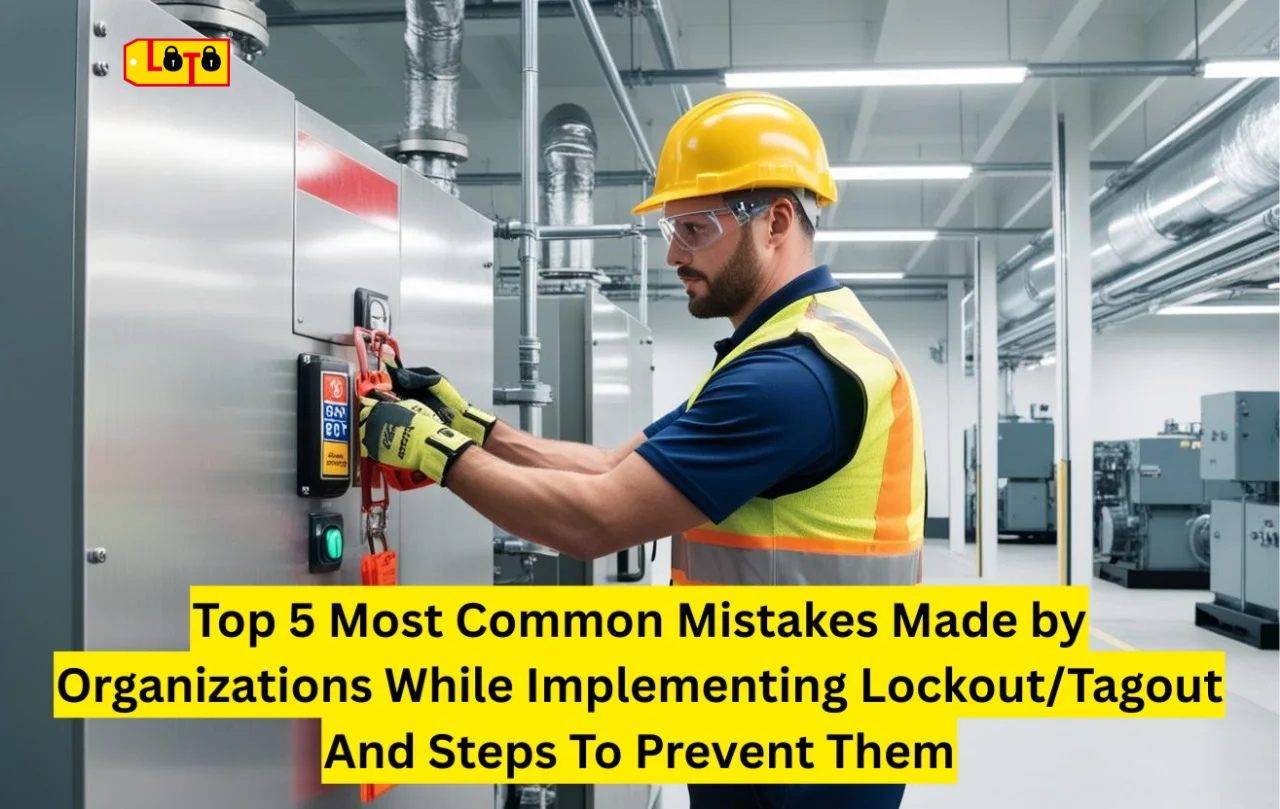
Lockout/Tagout or LOTO is an integral part of any organization’s HSE procedure to ensure safety of its people from unauthorized or accidental start-up of machinery during maintenance, commissioning or shutdowns. With increased awareness of LOTO across the world and implementation being a regulatory requirement too, Lockout Tagout has become responsible for preventing near misses, incidents and fatalities in the workplace.

As experienced manufacturers and innovators in the field of LOTO, we still observe some common mistakes companies make while developing their energy isolation programs. Going further, lets briefly discuss the top 5 common Lockout Tagout mistakes and how they can be avoided.

Problem 1: Inadequate and Unrevised Energy Isolation Procedures

One of the most fatal and common problems that organizations make are incomplete and/or unrevised Lockout Tagout procedures. Failure to develop a comprehensive Energy Isolation procedure for every equipment can result in half-baked Lockout tagout programs which still pose a considerable risk to the workers. Moreover, lack of constant revision of said procedures can leave the gaps unidentified and increase risk of an accident over time.

Solution: Thorough Energy risk assessment and Annual LOTO Audits

A systemic and detailed risk assessment of all equipment can help map every hazardous energy source including electrical, mechanical, hydraulic, pneumatic, thermal, potential, etc. Next, a machine-specific Lockout tagout procedure should be developed and posted on each machine for technicians to revise before starting maintenance. Furthermore, an Annual LOTO Audit can help identify gaps in existing procedures, stay updated on new compliances and adapt to innovations in Lockout Tagout hardware.

Problem 2: Lack of Proper Training

Organizations provide refreshers and training on various HSE-related topics, but many miss the mark on providing holistic training related to Lockout Tagout implementation. While most LOTO trainings focus on the role of authorized person, they tend to overlook the responsibilities of the affected employees, management and other stakeholders. Subsequently, the lack of knowledge can cause employees to overstep their authority, neglect warning signs and ultimately cause accidental or unauthorized startup of machinery leading to incidents/ fatalities.

Solution: Comprehensive training and refresher courses for all employees

By providing comprehensive LOTO training to all stakeholders, an organization can grow its corporate safety culture and ingrain the importance of Lockout Tagout in everyone who steps on site. Since Lockout Tagout is a team activity which may require more than 1 department to be involved (for example: Maintenance, Production, HSE, etc.), it is important for all employees to receive theoretical and practical training based on their roles. For effective practical training and refreshers on LOTO procedures, organizations can use a LOTO simulation board to provide hands-on training in a safe classroom environment. To know more about this solution, please contact us at info@lotosafetyproducts.com.

Problem 3: Failure to reach zero energy state and lack of verification

A common misconception is –‘A machine that is switched off is safe to work on’. WRONG! Failure to account for residual energy can cause equipment to malfunction during maintenance. Moreover, switching off and locking the operating controls is seldom enough to make the machinery safe to approach. An additional step of verification is often missed out which ensure the LOTO devices are on correctly and if all hazardous energies have been released.

Solution: Bleed stored energy and follow LOTO policy

Organization should ensure that while conducting LOTO, the authorized employee should refer to the risk assessment report and identify all hazardous energy sources including any residual or stored energy (e.g.: pressurised air, hydraulic pressure, stored mechanical or electrical energy, etc.). Once identified, they should safely release all stored energy through bleed valves, grounding, mechanical blocking, etc. as a part of their documented LOTO procedure. Once zero-state is achieved and LOTO devices have been applied, it should be verified by attempting to start or operate the equipment. Additionally, organizations should enforce the LOTOTO (LockOut Tag Out Try Out) to verify if the LOTO devices have been installed correctly and operating controls are immobilized.

Problem 4: Unorganized LOTO management

When companies are unorganized with their Lockout Tagout policy, it can cause non-uniformity in implementation which can lead to near-misses or by-passing of the procedure. For instance, if an organization has not laid down the LOTO policy for shift changes or 3rd party contractors, it creates a window of uncertainty where Lockout Tagout is rendered ineffective. Likewise, for companies that are unorganized in their storage of LOTO devices and padlocks, it can increase their down-time trying to locate or procure lost devices/ loto padlocks. Ultimately, the added time can result in the procedure being bypassed due to time and production pressures.

Solution: Uniform LOTO policies for all stakeholders and Dedicated storage Units

To avoid confusion or conflicting LOTO procedures, an organization must outline LOTO procedures for all scenarios, especially, shift changes and 3rd party contractors. The policy must highlight the steps for isolation and padlock management during these events as multiple teams are involved and a streamlined system will mitigate risks of accidental or unauthorized startup of equipment. Furthermore, to enable quick retrieval of LOTO devices and padlocks, it is essential for organizations to use dedicated storage units like LOTO Stations, padlock stations or loto shadow boards to efficiently store and manage all their LOTO hardware to avoid delays in maintenance schedules and give people lesser reasons to not conduct such an important life-saving procedure.

Problem 5: Using Incorrect LOTO devices and padlocks

With multiple choices available to solve similar isolation problems, many organizations end up choosing padlocks and devices which are unfit for their use case. This leads to wastage of inventory and excessive expenditure of time and money trying to get the right product. Using incorrect devices and padlocks cause ineffective and inefficient implementation of Lockout tagout which increases risk and downtime.

Solution: Contact LOTO Safety Products DMCC……… (Cheeky, aren’t I?)

Since our inception in 2011, we at LOTO Safety Products, have focused on providing solutions in Lockout tagout and differentiating ourselves as an innovator. Drawing from our experience of 250+ field visits, we can guide our clients to procure the right products for their isolation requirements with a high accuracy rate. Our team of professionals recommend standardized, high-quality products which can serve multiple functions in your LOTO program allowing you to save on inventory management, cost of devices and time spent procuring LOTO hardware. We take our motto “Simplifying LOTO” seriously and it reflects in our products and interactions with customers.

* The author of this blog is Zulfikar– Director at LOTO Safety, Dubai.
This blog is written to educate interested parties on Lockout Tagout products.